
Flowers are a timeless gift for life’s special moments. They bring joy and warmth to any space. A beautiful bouquet can leave a lasting impression, even after it’s gone. To make the most of this gesture, it’s essential to properly care for the flowers.
Receiving a bouquet of fresh flowers is always a delight. But their beauty is fleeting if not properly maintained. By following simple flower care tips, you can extend the life of your flowers and continue to enjoy their beauty.
Key Takeaways
- Proper flower care can extend the life of your bouquet.
- Simple tips can help maintain the freshness of your flowers.
- Understanding the basics of flower care is essential.
- Fresh flowers can brighten up any space.
- Proper care can make a big difference in the longevity of flowers.
The Science Behind Flower Freshness
How long cut flowers last depends on many things. These things are part of their biology. Knowing about them helps keep flowers fresh longer.
Understanding the Flower Life Cycle
Flowers grow, bloom, and then wilt. Cutting a flower interrupts this cycle. But it doesn’t stop the flower’s inner workings right away. Knowing this cycle helps us see why we need to care for flowers right.
Factors That Affect Cut Flower Longevity
Many things affect how long cut flowers stay fresh. These include water quality, temperature, and bacteria in the vase. Proper care techniques can help these issues, making flowers last longer.
Why Flowers Wilt and Die
Wilting happens when flowers can’t get enough water. This is often because of blocked stem ends or bad water.
| Factor | Impact on Flowers | Care Tip |
|---|---|---|
| Water Quality | Bacteria growth can clog stems | Change water regularly |
| Temperature | High temps accelerate wilting | Keep flowers away from heat sources |
| Stem Care | Blocked stems hinder water uptake | Trim stems at an angle |
Selecting the Freshest Flowers
To keep your arrangement fresh, start by picking flowers at their peak. The quality of the flowers you choose affects how long they last.
Signs of Fresh Flowers at the Store
When buying flowers, look for certain signs to get the freshest blooms.
Visual Indicators of Freshness
Fresh flowers have bright colors and firm petals. They should not wilt or turn color. The stems should be strong, and leaves should be green.
Touch and Smell Tests
Feel the petals to make sure they’re not soft or mushy. Fresh flowers smell nice but not too strong. Stay away from flowers with bad smells.
Best Times to Purchase Flowers
Buying flowers early in the morning or on the day they arrive is best. This way, you get the freshest ones.
Seasonal Considerations for Flower Selection
Choosing seasonal flowers helps them last longer. Seasonal flowers are fresher because they’re more available and travel less.
By thinking about these points, you can pick flowers that are not only pretty but also last longer. This makes enjoying them even better.
Essential Tools and Supplies for Flower Care
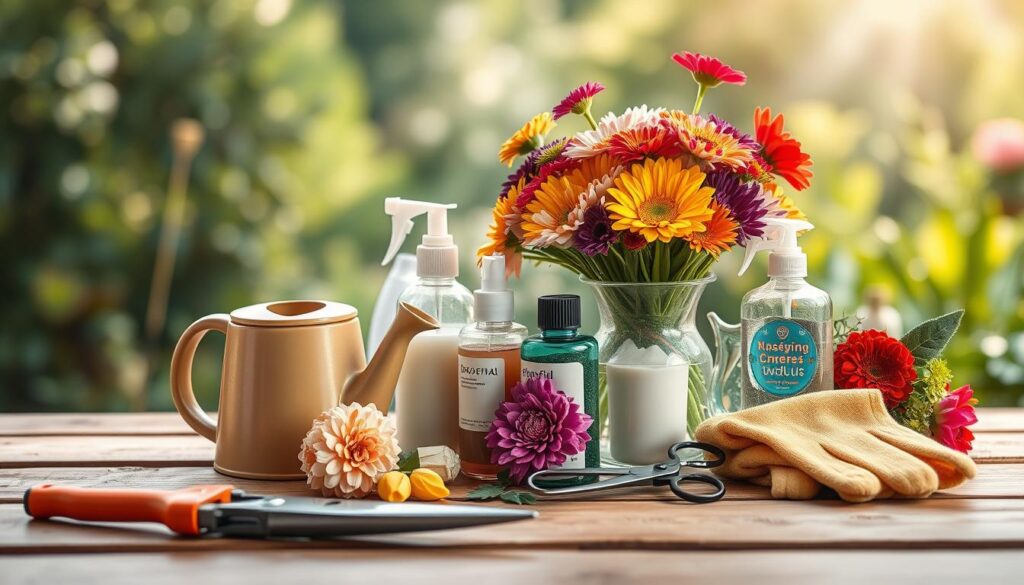
Good flower care starts with the basics. You need the right tools, vases, and preservatives. These are key to keeping cut flowers fresh and long-lasting.
Must-Have Cutting Tools
Good-quality cutting tools are a must. Sharp scissors or pruning shears are needed. They help make clean cuts. This stops stems from getting crushed and helps them drink water better.
Recommended Vases and Containers
The right vase is important for flower care. Clean, sturdy vases fit the flowers well. A vase that’s too small can crowd stems. This can lead to bad air and bacteria.
Flower Preservatives and Additives
Flower preservatives add nutrients and stop bacteria. Commercial flower foods have special ingredients. You can also make your own with sugar, vinegar, and bleach.
| Supply | Purpose |
|---|---|
| Sharp scissors or pruning shears | Making clean cuts on stems |
| Clean, sturdy vases | Holding flowers and providing support |
| Flower preservatives | Providing nutrients and preventing bacterial growth |
Immediate Care When Bringing Flowers Home
When you bring flowers home, it’s key to care for them right away. This helps them stay fresh and bright longer.
Unwrapping and Initial Inspection
First, take off any wrapping or packaging. Look for any damage or wilting. Also, check for leaves below the waterline, as they can cause bacteria.
First Trim and Preparation
Trimming and preparing your flowers is very important. You need to remove guard petals and damaged parts. Also, trim the stems correctly.
Removing Guard Petals and Damaged Parts
Some flowers, like roses, have guard petals. Taking them off helps the flower open better. Also, remove any damaged or diseased parts to keep the rest of the arrangement healthy.
Proper Stem Trimming Technique
Trim the stems at an angle with a sharp knife or pruning shears. This helps the flower drink more water. Cutting at an angle also stops the stem from sitting flat in the vase, which blocks water.
Hydration Techniques for New Flowers
After trimming, put the flowers in a vase with lukewarm water. You can add flower food or a mix of sugar and vinegar. Make sure the water level is above the stem base for better hydration.
By following these steps, you can make your cut flowers last longer. Taking good care of them from the start is crucial for their longevity and beauty.
- Unwrap flowers gently to avoid damage.
- Trim stems at an angle for better water uptake.
- Use lukewarm water and consider adding flower food.
The Perfect Cut: Techniques That Extend Vase Life
Proper stem cutting is a simple yet effective technique to extend the life of your cut flowers. Cutting the stems at the right angle and using the right tools can make a big difference.
Proper Cutting Angles and Methods
Cutting flower stems at an angle is a good practice. It helps the stem take in more water. This reduces the chance of the stem sitting too deep in the vase.
A 45-degree angle cut is often suggested. It helps the stem absorb more water.
When and How Often to Re-cut Stems
Re-cutting stems is key to keeping flowers fresh. It’s best to re-cut stems every 2-3 days. This stops bacteria from building up and keeps the stems drinking water.
When you re-cut, cut the stems a bit shorter. This removes any blocked or damaged areas.
Tools vs. Hand-Cutting: What Works Best
Choosing the right tools for cutting stems is important. Sharp, clean scissors or pruning shears are best. They make a clean cut without damaging the stem.
Hand-cutting or using dull tools can hurt the stem. This can stop the stem from taking in water well.
| Cutting Method | Effect on Water Uptake | Impact on Flower Longevity |
|---|---|---|
| Cutting at 45-degree angle | Increases water uptake | Extends flower life |
| Re-cutting every 2-3 days | Prevents bacterial buildup | Maintains flower freshness |
| Using sharp, clean tools | Reduces stem damage | Improves water absorption |
By using these cutting techniques, you can make your flowers last longer. They will stay fresh and look great for more days.
Water Quality and Temperature Considerations
Keeping cut flowers fresh needs careful attention to water and temperature. The right conditions help your flowers last longer.
Ideal Water Temperature for Different Flowers
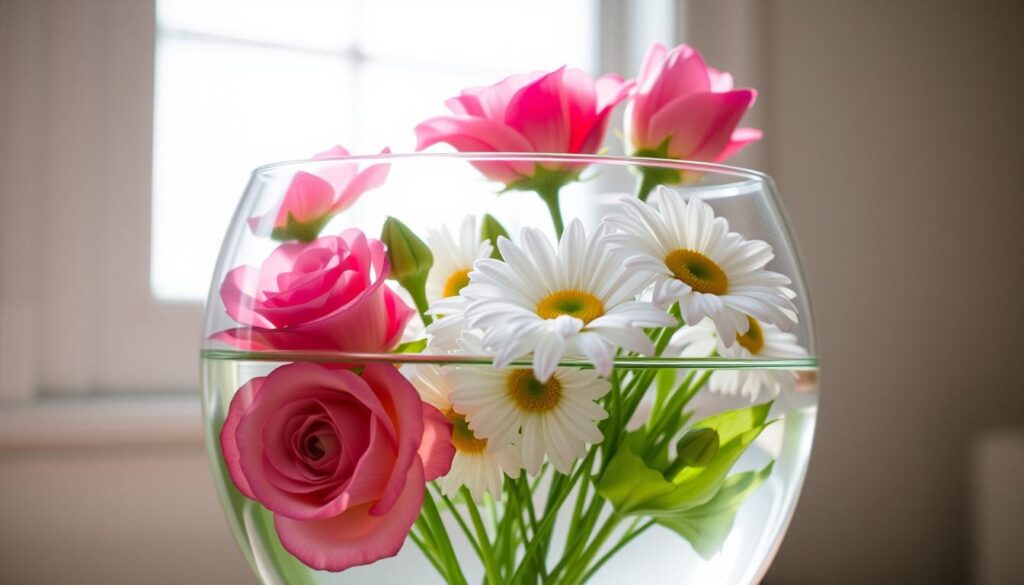
Each flower likes a certain temperature. Tropical flowers do well in warm water. Bulbous flowers like tulips and daffodils like it cooler. Knowing this helps you care for them better.
Tap Water vs. Filtered Water
Should you use tap water or filtered water for flowers? Tap water might have bad stuff like chlorine. But filtered water is cleaner and might make flowers last longer.
How Often to Change the Water
Changing the water often is key for floral freshness. Change it every 2-3 days. Cut the stems too. This stops bad bacteria and keeps flowers healthy.
By focusing on water quality and temperature, you can make your flower care better. Your flowers will stay bright and beautiful for more time.
How to Keep Flowers Fresh with Homemade Solutions
Learn how to keep your flowers fresh with things from your kitchen. Homemade solutions can work as well as store-bought ones to make your cut flowers last longer.
Effective DIY Flower Preservatives
Many DIY flower preservatives use common kitchen items. Two easy recipes are:
Sugar and Vinegar Solution
A mix of sugar and vinegar feeds flowers and stops bacteria. Mix 1 tablespoon of sugar and 1 tablespoon of white vinegar in a quart of water.
Citrus and Bleach Mixture
Using citrus juice and bleach is also good. Add 1/4 cup of lemon or orange juice and 1/4 teaspoon of bleach to a quart of water. The acidity and bleach stop microbes.
Kitchen Ingredients That Extend Flower Life
Some kitchen items can make flowers last longer. For example, aspirin lowers the water’s pH and fights bacteria. Also, a penny or copper wire in the vase helps because copper kills microbes.
Ginger is another good choice. It stops fungi from growing in the water.
Myths vs. Facts About Homemade Preservatives
Some homemade preservatives really work, but others are myths. For example, adding a spirin or an aluminum can doesn’t really help flowers last longer. This is not backed by science.
It’s key to know what’s true and what’s not. What works for one flower might not work for another. Always try a small batch first before using it on your whole bouquet.
Commercial Flower Preservatives: Do They Work?
Do commercial flower preservatives really help flowers last longer? They claim to do so by giving nutrients and stopping bacteria. This helps keep flowers fresh.
Types of Commercial Preservatives
There are many kinds of flower preservatives out there. Some have sugars to feed the flowers. Others have things that kill bacteria in the water. Knowing what’s in them is key for keeping flowers alive.
How to Use Flower Food Correctly
To make flower preservatives work, follow the directions. You usually mix it with water before adding flowers. The right amount is important. Too little won’t help, and too much can harm.
Cost-Benefit Analysis of Commercial Products
Think about the cost of flower preservatives. They can make flowers last longer, but they cost more. For many, it’s worth it to keep flowers fresh.
In short, flower preservatives can help keep flowers fresh. By knowing what they are and how to use them, we can take better care of our flowers.
Environmental Factors Affecting Flower Longevity
Knowing how to manage the environment can make your flowers last longer. The life of cut flowers depends on things like temperature, humidity, and sunlight.
Optimal Temperature Settings
Most flowers like it cool, between 65°F to 75°F (18°C to 24°C). Avoid placing flowers near heating vents or radiators. Sudden changes can stress them out.
Humidity Considerations
Flowers like a humid spot, between 40% to 60% humidity. To keep it right, put the vase on a tray with water and pebbles.
Sunlight and Placement in Your Home
Flowers need some light but too much sun can wilt them fast. Placing flowers near a window with filtered sunlight is best.
Avoiding Heat Sources and Drafts
Keep flowers away from heat like ovens and heaters. Also, avoid drafts from windows or doors to prevent them from drying out.
Best Locations for Different Flower Types
Each flower type likes different light and temperatures. For example, tropical flowers like orchids and anthuriums like it warm. Roses and carnations prefer cooler spots.
| Flower Type | Ideal Temperature | Sunlight Preference |
|---|---|---|
| Roses | 65°F – 72°F (18°C – 22°C) | Indirect Sunlight |
| Tropical Flowers | 75°F – 85°F (24°C – 29°C) | Bright, Indirect Sunlight |
| Carnations | 60°F – 70°F (15°C – 21°C) | Partial Sunlight |
By controlling these factors, you can make your cut flowers last longer. They will stay fresh and beautiful for more time.
Special Care for Different Flower Types
Keeping your flowers looking great means knowing what they need. Each flower type has its own special care. This care helps them stay fresh and beautiful longer.
Roses: The Classic Bloom
Roses are loved by many and need special care. To keep them fresh, trim the stems at an angle and change the water often. Using a floral preservative helps too.
Also, keep roses out of direct sunlight and heat. This stops them from wilting too soon.
Lilies and Bulb Flowers
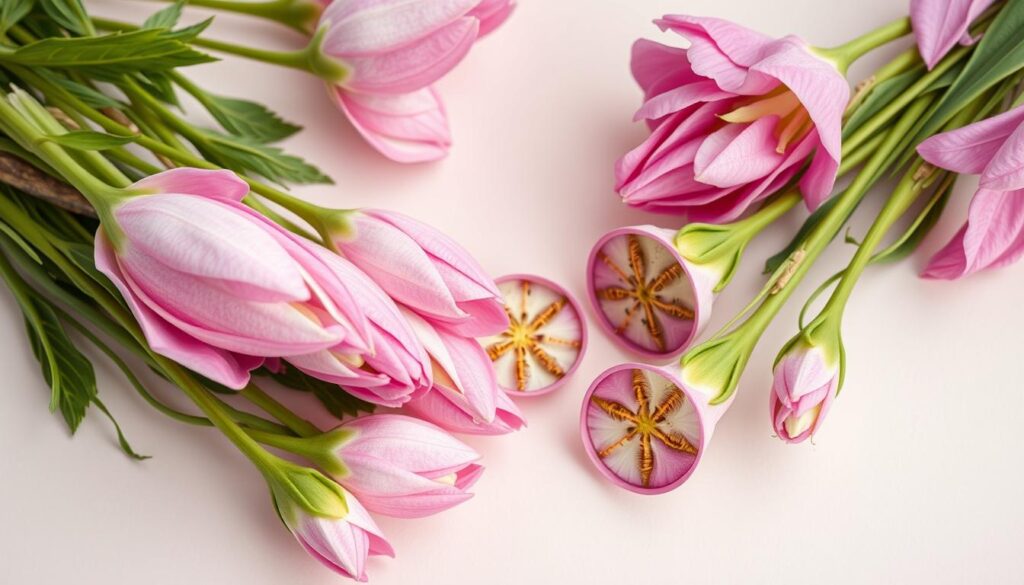
Lilies and bulb flowers need different care than others. Removing the anthers from lilies stops pollen stains and allergies. Place these flowers in a cool spot, away from drafts and sunlight.
Tropical Flowers and Special Requirements
Tropical flowers like orchids and heliconias need special care. They love high humidity and should stay cool. Use lukewarm water and don’t overcrowd them to keep them fresh.
Wildflowers and Garden Varieties
Wildflowers and garden flowers are tougher and need less care. But, they still need regular water changes and a cool, shaded spot. Trimming the stems right also helps them last longer.
Knowing and meeting each flower’s needs lets you enjoy their beauty longer. Whether it’s roses, lilies, tropical flowers, or wildflowers, the right care makes a big difference.
Arranging Flowers for Maximum Freshness
Proper arrangement techniques can make cut flowers last longer. By thinking about a few key things, you can make beautiful arrangements that stay fresh.
Spacing and Crowding Considerations
It’s important to give flowers enough space. Too many flowers together can cause them to wilt faster. Make sure to leave some space between each stem.
- Leave at least 1-2 inches between stems for better air circulation.
- Use a vase that is appropriately sized for the arrangement.
Removing Foliage Below the Water Line
Removing foliage below the water line is a smart cut flower tip. Leaves in the water can rot and spoil the water. This makes your flowers last shorter.
To keep your flowers fresh, cut off any leaves that will be in the water. This keeps the water clean and fresh.
Complementary Flowers That Enhance Longevity
Some flowers go well together and make your arrangement last longer. For example, roses and baby’s breath make a beautiful and lasting bouquet.
By using these vase life tips and picking flowers that go well together, you can make stunning arrangements. These arrangements will stay fresh for a long time.
Advanced Techniques from Professional Florists
Want your bouquets to stay fresh longer? Learning from professional florists is key. They know how to keep flowers looking great for more days.
Conditioning Methods Used by Experts
Florists cut stems at an angle and remove leaves below the waterline. This stops bacteria from growing. It helps flowers drink water better and stay healthy.
Professional Secrets for Extended Bloom Life
Florists use special products and methods to make flowers last longer. They use sprays and seal stems to keep flowers fresh.
Floral Preservative Sprays
These sprays stop bacteria in water. They help flowers stay fresh longer.
Stem Sealing Techniques
Florists seal stems with flame or wax. This keeps air out and water in. It works well for flowers with hollow stems.
Commercial Practices You Can Adapt at Home
You can use some pro techniques at home. Try flower food packets or make your own preservatives. These steps can help your bouquets last longer and look better.
Troubleshooting Common Flower Problems
Flowers can wilt or have other issues even with good care. Knowing how to fix these problems is key. It helps flowers last longer and look better.
Dealing with Wilting and Drooping
Wilting is a big problem with cut flowers. Cut stems at an angle and put them in a clean vase with fresh water. Adding a floral preservative helps too.
“Cut flowers are like athletes; they need the right conditions to perform at their best,” says a famous florist. Proper hydration stops wilting.
Solutions for Yellowing Leaves
Yellow leaves mean too much water or bacteria. Remove leaves that will get wet. Change the water often and use a preservative to keep leaves healthy.
Preventing Mold and Bacteria Growth
Mold and bacteria can spoil a flower arrangement fast. Use a clean vase and trim stems often. Don’t crowd the vase to avoid mold.
Using a floral preservative stops bacteria and mold.
Rescuing Dying Arrangements
If your arrangement is fading, you can still save it. Cut the stems again, change the water, and add preservative. Sometimes, just rearranging or removing dead flowers can make it look new again.
With the right vase life tips, your flowers can last longer.
Fixing flower problems quickly can make your cut flowers last longer. This way, you can enjoy their beauty for more time.
Preserving Special Occasion Flowers
Keeping special occasion flowers fresh is key. Flowers from weddings, holidays, and birthdays can last longer with the right care.
Wedding Bouquet Preservation
Preserving a wedding bouquet is a careful task. It’s important to handle it gently and store it in a cool, dry spot. Some choose professional methods like drying or freeze-drying to keep it beautiful.
Holiday Arrangement Maintenance
To keep holiday arrangements fresh, make sure they get enough water. Place them away from direct heat. Replacing wilted flowers regularly can also help.
Extending the Life of Gift Bouquets
Gift bouquets can last longer with simple care. Trim the stems, change the water, and keep them out of direct sunlight. These steps help keep them fresh.
Birthday and Anniversary Flowers
For birthday and anniversary flowers, use flower food or a homemade preservative. Keep them in a cool room and avoid drafts. This helps them last longer.
Sympathy and Funeral Arrangements
Sympathy and funeral arrangements need special care. Keep them away from sunlight and heat. Make sure the water is fresh. This helps maintain their dignity and appearance.
By following these tips, you can enjoy your special occasion flowers for longer. This helps keep the memory of the occasion alive.
Conclusion: Enjoying Your Flowers to the Fullest
By using the tips from this article, you can make your flowers last longer. It’s important to take good care of your cut flowers. This means picking the right flowers, using the right tools, and keeping the right environment.
Good flower care includes many steps. These include trimming, hydrating, and keeping water clean. By doing these things, you can enjoy your flowers for a longer time. This makes them look better and feel more special.
Now you know how to take better care of your flowers. By following these tips every day, you can make your flowers last longer. This way, you can enjoy their beauty for even more time.